
EU Commission imposes fine of €471.9 million on fragrance manufacturers. The EU Commission has imposed fines totalling €471.9 million on Firmenich, Givaudan and International Flavours & Fragrances (IFF). Between March 2019 and March 2023, the companies exchanged competitively sensitive information, including details on prices and negotiations with Unilever. The case concerns the European fragrance market and has implications for manufacturers of cosmetics and household care products, as well as for consumers and the retail sector.
Fines for collusion in the fragrance market
The European Commission has fined Firmenich, Givaudan and IFF for their involvement in an international cartel in the fragrance sector. According to its investigation, the exchange of sensitive business information lasted for more than four years and extended across the European Economic Area (EEA). The Commission found that the companies had thereby reduced uncertainty regarding the future behaviour of their competitors and replaced competition with a coordinated approach.
According to the Commission, the three manufacturers are among the world’s largest suppliers of fragrances. Firmenich and Givaudan are based in Switzerland, whilst IFF is based in the USA. Their fragrances and flavourings are used in, amongst other things, personal care products, cosmetics, detergents and cleaning products.
Information exchange concerned prices and negotiations
According to the Commission, all three companies exchanged information about their ongoing business with Unilever, a major buyer of consumer goods fragrances. This included details on price trends, price negotiations, negotiation tactics and a possible energy surcharge. Furthermore, the companies coordinated their approaches to Unilever’s requests for greater transparency regarding fragrance compositions and raw material costs. The Commission also found that the three companies had agreed not to actively poach staff responsible for Unilever business from one another. Givaudan and IFF also exchanged sensitive information regarding their business with consumer goods fragrances. At times, the exchange also concerned the market for so-called ‘fine fragrances’, i.e. fragrance compositions for personal perfumes. This included information on planned price increases and the status of negotiations with customers. According to the Commission’s findings, senior executives at the companies were aware of the anti-competitive contacts made by their staff. From November 2021 onwards, senior executives at Givaudan and IFF were themselves also involved in the more extensive exchange of information.
Fines take into account cooperation and extent of involvement
The Commission set the fines in accordance with its 2006 guidelines. Factors taken into account included the duration, geographical scope and gravity of the infringement, as well as the value of the sales concerned within the EEA. In the case of Firmenich, its more limited involvement in the exchange of information was taken into account as a mitigating factor.
All three companies cooperated with the Commission under the leniency programme. In addition, the fine for each company was reduced by ten per cent because the companies acknowledged their involvement and liability and agreed to the settlement procedure.
- Company Fine after reductions
- Firmenich 137,689,000 euros
- Givaudan 252,363,000 euros
- IFF 81,915,000 euros
- Total 471,967,000 euros
Proceedings involving authorities from several countries
The Commission launched the investigation on its own initiative. In March 2023, unannounced inspections were carried out at the companies’ premises; in November 2025, the Commission opened formal proceedings. The investigation was conducted in close coordination with the UK Competition and Markets Authority, the Swiss Competition Commission and the US Department of Justice.
The Commission classified the conduct as a single and continuous infringement of Article 101 of the Treaty on the Functioning of the European Union and Article 53 of the EEA Agreement. Both provisions prohibit agreements and concerted practices that may restrict competition in the single market.
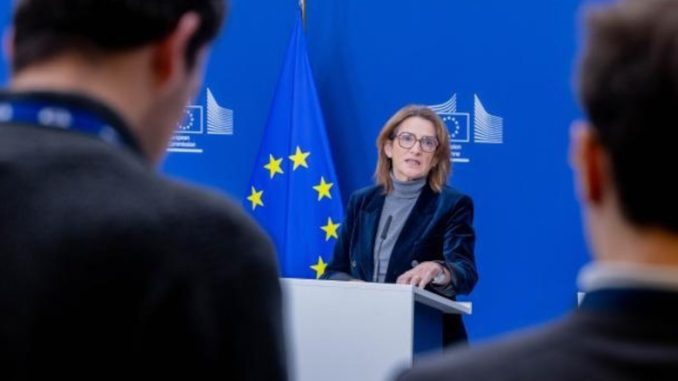
Teresa Ribera, Executive Vice-President of the European Commission for a Clean, Fair and Competitive Transition, stated:
“Today, we fined the three largest fragrance producers a total of EUR 471.9 million for breaching EU competition rules. For years, they exchanged information on their prices, costs and other commercially sensitive information. This likely harmed and raised costs for their customers who use those fragrances to make everyday consumer goods like cosmetics, detergents and cleaning products. As a result, people across Europe may have been paying more for their weekly shopping. This is not acceptable, we will continue to enforce the rules and protect consumers.”
Possible consequences for affected companies and customers
According to the Commission, companies and individuals who have suffered harm as a result of the anti-competitive behaviour may claim damages in national courts. A Commission decision is considered binding evidence in such proceedings that the infringement found did take place and was unlawful. The fines are paid into the general EU budget; they are not earmarked for specific expenditure. Further details on the proceedings are to be published in the Commission’s public register under case number AT.40826 as soon as confidentiality issues have been resolved.
[Text: epcnews/Image: European Commission]
[Transparency note: We use AI-supported tools to check the readability, spelling and tagging of our articles. The content of the texts is edited and produced by our editorial team.]