Luxury Retail Space 2025 – Beauty as a Growth Driver. In 2025, the European luxury retail sector demonstrated significant growth in new openings and increasing diversification of the brand landscape, despite general industry challenges. The Beauty & Perfumery segment, in particular, experienced dynamic growth, especially in prime locations such as Paris. At the same time, the ongoing shortage of space in the best shopping streets is leading to rising rents and creative space solutions.
Luxury retail space in 2025 – Strong expansion – Strategic importance of physical flagship stores
Cushman & Wakefield’s “European Luxury Retail Report” documents a total of 96 new luxury store openings in 20 prime shopping streets across 16 cities and 12 countries for 2025 – an increase of 13 per cent compared to the previous year. This trend highlights the strategic importance of physical flagship stores for luxury brands, which are increasingly turning to immersive and multi-storey concepts to bring their brand identity and craftsmanship to life. Robert Travers, Head of EMEA Retail at Cushman & Wakefield, emphasises that luxury stores are now seen as cultural statements and thus go far beyond mere retail space.
Fashion, jewellery and beauty as growth drivers with a particular focus on perfumery
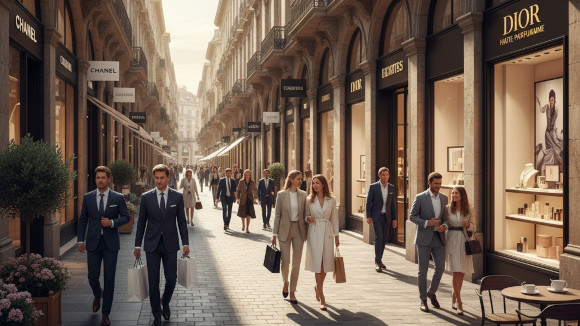
The Fashion & Accessories segment remains the biggest growth driver with 48 new stores, followed by jewellery and watches with 28 new openings. Whilst clothing, footwear and accessories are recording slight declines, the Beauty & Perfumery segment is showing particularly dynamic growth. In Paris alone, six new boutiques were opened in the so-called ‘Haute Parfumerie’ sector, underscoring the importance of this specialist segment. Cushman & Wakefield forecasts further expansion in this segment in the coming years.
Diversification through challenger brands strengthens competition
Alongside the major luxury groups such as LVMH, Kering and Richemont, which account for around a third of new openings, the number of so-called “challenger brands” is growing. These smaller, often innovative brands are opening new flagship stores in prime locations, thereby broadening the market. One example is the Swedish brand Toteme, which opened three new locations on leading shopping streets in 2025. This development shows that the luxury market is characterised not only by established groups, but also by increasing diversity and competition.
Space shortages and rising rents in prime locations as key challenges
Demand for prime retail space continues to significantly outstrip supply. Eight of the 20 luxury high streets surveyed recorded a vacancy rate of zero per cent in 2025, whilst a further six high streets had less than five per cent of space available. This is leading to sustained rent growth, which is reaching record levels in some markets. Rents in luxury locations are seven per cent above the level of 2018, the year considered a turning point for online retail. Rents are also rising in non-luxury shopping streets, indicating a general revival in demand for high-quality physical locations.
Situation in Germany: Moderate new openings, but promising developments
In Germany, new openings declined slightly in 2025, with three new stores opening on Munich’s Maximilianstraße and Düsseldorf’s Königsallee. Nevertheless, the pipeline remains active thanks to large-scale new-build and refurbishment projects such as ‘Le Coeur’ in Düsseldorf and the Trinkaus Karree. Brands such as Chanel, Dior and Bulgari are investing in flagship stores and pop-up locations to strengthen their presence. Vacancy rates remain low at 1.8 per cent in Munich and 3.1 per cent in Düsseldorf, with rents stable but still below 2018 levels. These developments demonstrate a strategic and robust approach within the German luxury retail sector.
Demand for physical experiences and high-quality retail space
Despite economic uncertainties, the European luxury retail sector remains on a growth trajectory, driven by strong demand for physical experiences and high-quality retail space. The scarcity of space in prime locations is forcing brands and landlords to find creative solutions and is leading to intense competition for the best sites. For the perfumery sector, as part of the luxury segment, this presents opportunities through expansion in the beauty sector and challenges due to rising rental costs and limited availability of retail space. The strategic importance of flagship stores as an expression of brand identity and craftsmanship will remain a key factor in the future.
[Text/Image: epcnews]