
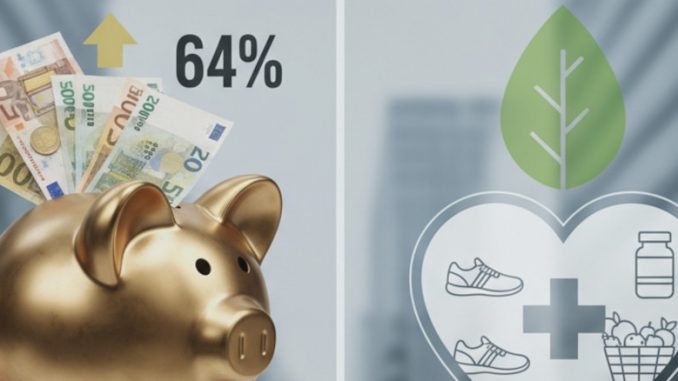
Discounts and Private Labels Are Gaining Ground – BCG Study on German Consumer Behavior: Study Shows Shifting Priorities Among German Consumers in 2026. A recent study by the Boston Consulting Group (BCG) reveals that 64% of Germans view the economic situation as poor, and many consumers are more likely to save their extra income than to spend it. Discounts and private labels are gaining importance, while sustainability is losing relevance. Health remains one of the few categories in which consumers continue to invest despite the need to save.
Economic uncertainty is shaping consumer behavior in Germany
The latest BCG study of approximately 1,800 German consumers shows that the majority view the economic situation as negative. High energy prices are particularly burdensome for 75% of respondents, and persistent inflation for 72%. Accordingly, 78% of consumers expect prices to continue rising over the next six months. At the same time, about one-third of respondents expect their income or savings to decline. This uncertainty is leading many Germans to rethink their spending habits and prioritize their expenditures more carefully.
Saving Instead of Spending: Consumers Rely on Financial Reserves
Four in ten Germans would save any additional income rather than spend it. This reluctance to spend is evident in nearly all product categories, with the exception of everyday necessities such as groceries, pet food, and household cleaning products. Growth in these areas is driven primarily by price increases rather than higher sales volumes. Consumers are comparing products more closely, scrutinizing their spending more critically, and focusing on products with clear added value, according to Karin von Funck, a senior partner at BCG.
Discounts and private labels are gaining importance
Consumer price sensitivity is reflected in the strong influence discounts have on purchasing decisions: Up to 74% of purchases are influenced by them. In addition, 55% of Germans frequently choose private-label brands for groceries, which is significantly above the European average of 39%. Private-label brands are also particularly well-established in the household care (39%) and skin care/cosmetics (30%) sectors. This trend shows that value for money is a top priority for many consumers.
Sustainability Is Losing Priority, While Health Remains Relevant
In light of cost pressures, sustainability is losing importance as a purchasing criterion. Only 17% of Germans are still willing to pay a premium for sustainable products. While a slight increase in sustainability awareness can be observed in individual categories such as food and personal care, value for money dominates overall. However, the study also reveals generational differences: Younger consumers place greater emphasis on individuality and conscious purchasing decisions, while older consumers tend to reduce their consumption.
Health as a Countertrend
The health category is an exception to the general trend toward saving. About two-thirds of respondents consider health and well-being to be an important lifestyle factor. This is reflected in their consumption behavior: cooking fresh meals, avoiding artificial ingredients, choosing low-calorie beverages, and increased use of vitamins and dietary supplements are examples of targeted investments despite the need to save.
[Text/Image: epcnews]
For additional information please refer to our Germany Magazin:
www.parfuemerienachrichten.de